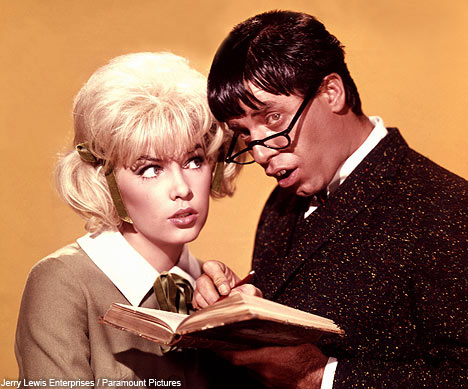
Jerry Lewis Trailer of the Day: THE BIG MOUTH
Labels: Jerry Lewis, The Big Mouth
posted by Aaron W. Graham at 6:52 PM
1 comments


"Life is an obscure hobo, bumming a ride on the omnibus of art."
Labels: Jerry Lewis, The Big Mouth
posted by Aaron W. Graham at 6:52 PM
1 comments
 I finally found a copy of this long out-of-print tome comprised of Lewis' sole foray in teaching filmmaking -- at USC, 1967 -- and felt the need to relate: this is simply the best filmmaking book I've ever read.
Labels: Jerry Lewis, The Total Film-Maker
posted by Aaron W. Graham at 7:50 PM
2 comments


"Then the intangibles! What are they? How many? Can I teach the intangibles of film-making? Not really. Maybe the only answer is: How do you touch another man's soul? It might develop from that. Sit down and say, You're dealing with lovely human beings. Each one of them is an individual. Each one of them in his own right a lovely, important-to-someone human heing. Some will behave like turds, but you must try to understand why."
--Jerry Lewis, "The Total Film-Maker"
Labels: Jerry Lewis, Three on a Couch
posted by Aaron W. Graham at 7:54 PM
1 comments
 In 1968, Las Vegas Rat Packers Sammy Davis, Jr. and Peter Lawford teamed up for SALT AND PEPPER, the first of two British produced action/comedies that have largely been forgotten today, save for an unadvertised DVD release from MGM last year that packaged them up at a reasonable price.
 The story opens at the familiar Salt & Pepper nightclub in Soho London from the first film, but smartly moves away from that location in the first half hour once a mystery is put into gear. After finding out that they owe mass sums of money, Chris Pepper (Lawford) decides to ask Lord Sydney Pepper, his twin brother (also played by Lawford), for the cash. Unfortunately, the two don’t get along so well, and he says no. Undaunted, Chris decides to put on his brother’s style of clothing in order to get a free meal, but that fake mustache and dress rehearsal of the phony British accent comes in handy once it’s revealed that his twin has been murdered. Unbeknownst to Charles, Chris assumes the role of his dead brother in order to forgo his money woes, letting Charles believe that his best friend has been killed. Chris, now in disguise as Lord Sydney, hires Charles for his assistant and takes him to live in a well-appointed castle in the country. Charles takes the “Uncle Tom” position (as he puts it to one of the grievers at the funeral for Chris) to solve his faithful friend’s murder.
All of this leads to a few fundamental questions: why would Chris keep his identity a secret for so long, especially once they’re out of harm’s way and out in the country? His friend is dealing with intense suffering following this loss, and it seems a stretch that Chris would take so long in doling out the info. And wouldn’t Chris be just a little bit more wary of the as-yet uncaught murderers, who’ll now think that their attempted slaughter wasn’t successful? He seems awfully brazen in announcing to the world that Lord Sydney is not dead. Admittedly, the answer of both of these questions would extinguish the ambers of pathos of this thought-to-be terminated friendship. Instead, Lewis decides to meditate on this theme of a lost friendship, which can’t help but conjure up the not-too-distant memories of Martin & Lewis and the fall-out of that break-up. There’s a distinct gravity to the scenes featuring Davis Jr. (including a touching musical performance) following the supposed death of Chris that would sorely be missed had Lewis kowtowed to plausibility.
As some esteemed critics have noticed, Sammy Davis Jr. is essentially playing Jerry, while Lawford does his best Dean Martin. Since Martin & Lewis broke up before Lewis began directing, this is the closet approximation we have of what it would have been like had Lewis made an M&L film. Not surprisingly, considering Lewis would be more comfortable with someone’s take on his comic personality than trying to fathom what made his slick former partner tick, Lawford takes a backseat once the film gets to the castle. Sammy seems to have been an apt pupil, because his handling of such prime Lewis shtick as the herky-jerky reactions to the monolithic door of his castle quarters (edited perfectly to “Thus Spoke Zarathustra” in a 2001: A SPACE ODYSSEY reference) and his facial distortions in response to the uncovering of the true identity (he overhears Chris cooing a recognizable come-on to one of his many female conquests) are mightily impressive.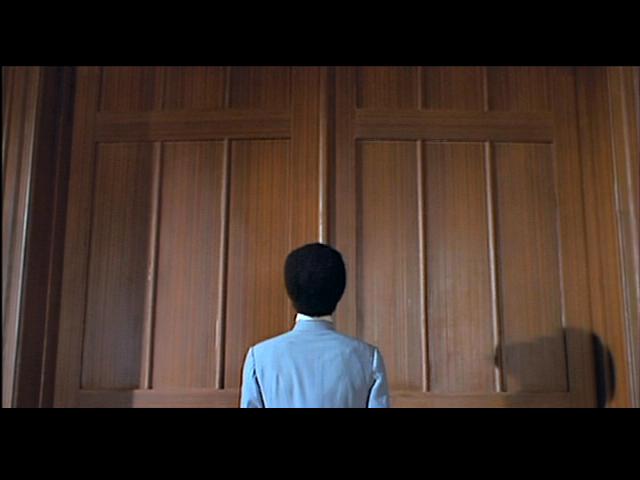
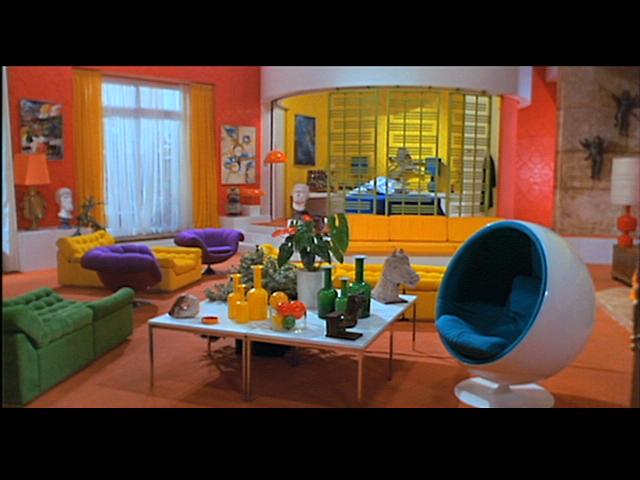

 Shots of eye-popping color and rich, intricate décor that help to illustrate, without a doubt, Jerry at the top of his game.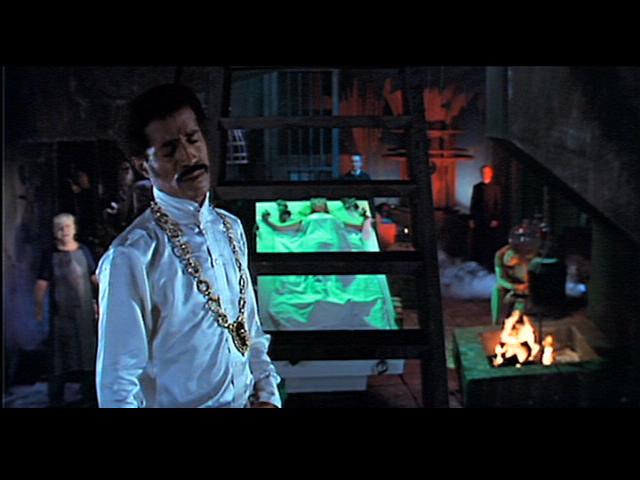

 Adding to the cult cache are cameos by none other than Peter Cushing and Christopher Lee, who appear as their Hammer Film counterparts (Dr. Frankenstein and Dracula, respectively) in the castle’s basement dungeon after Charles nervously stumbles upon a secret passageway located in a bookshelf.
After reconciling, Salt & Pepper fight it out with the murderers, but prove to be unsuccessful, as Lewis gives us a true meta-ending that sees our heroes addressing their real life names before being chased off the screen in long shot by the criminals. Instead of a simple The End, our final on-screen title is simply: That’s It!
Why isn’t this film better known in respect to the Lewis canon? Or, if it is, where may one read more about it?

Labels: Jerry Lewis
posted by Aaron W. Graham at 3:38 AM
8 comments

 My LP Collection